
Updated: April 2, 2026
10 Delicious Hilsa Recipes Featured at the Sundarban Hilsa Festival
The story of hilsa in the delta is never only about food. It is about aroma, memory, river culture, household skill, and the deep emotional place that fish holds in Bengali life. At the Sundarban hilsa festival, this truth becomes especially clear. A dish of hilsa is not presented as a simple item on a menu. It arrives with mustard fragrance, green chilli warmth, soft steam, careful cutting, and the quiet respect that cooks give to an ingredient that is both delicate and rich. This is why the food table at the festival draws so much attention. People do not gather around it only to eat. They gather to understand how one fish can express so many shades of taste, texture, and regional identity.
Within the wider cultural appeal of Sundarban hilsa festival 2026, the recipes themselves form the heart of the experience. Each preparation brings out a different character of hilsa. One dish may highlight its oil and softness. Another may underline the sharpness of mustard. A third may depend on the earthy calm of banana leaf or the gentle depth of yogurt. The result is a festival table that feels layered, intelligent, and deeply rooted in place. For anyone exploring food as part of a meaningful Sundarban travel experience, these recipes offer a powerful way to read the culture of the region through taste.
Why Hilsa Becomes the Natural Center of the Festival
Hilsa is admired because it asks for judgment, patience, and balance. It is not a fish that rewards careless cooking. Its flesh is soft, its oil is distinctive, and its bones require attention. A skilled cook knows that too much heat can damage its character, too much spice can hide its natural sweetness, and too little seasoning can leave the dish flat. At the festival, this technical respect becomes visible in every kitchen setup and serving arrangement. The focus is not on creating unnecessary complexity. The real goal is to let the fish speak clearly.
This is also why the culinary side of the event stands out even for people who first arrive through interest in a Sundarban tour or a themed Sundarban tour package. The food is not decorative background. It is one of the main ways in which the festival expresses local identity. Hilsa connects river ecology, domestic tradition, festive cooking, and inherited knowledge. In that sense, every recipe at the festival becomes part of a living archive.
1. Shorshe Ilish
Shorshe ilish is often the first dish people think of, and for good reason. It is perhaps the most iconic hilsa preparation in Bengali cuisine. The power of the dish comes from a paste of black and yellow mustard, green chilli, salt, and a measured touch of turmeric. When prepared well, the sauce is sharp but not harsh. It should carry heat, aroma, and slight bitterness, yet still allow the fish to remain the center of attention.
At the festival, shorshe ilish is usually one of the most discussed dishes because it reveals the cook’s control. Mustard can easily become too strong, too bitter, or too coarse. The best versions are smooth, fragrant, and balanced. The oil of the hilsa blends with the mustard and creates a sauce that feels both intense and elegant. Served with hot rice, it represents the classic language of hilsa cooking: direct, confident, and unforgettable.
2. Bhapa Ilish
Bhapa ilish is quieter than shorshe ilish, but often even more refined. In this dish, hilsa is coated in mustard paste, grated coconut in some versions, green chilli, mustard oil, and salt, then steamed gently. The steaming process protects the softness of the flesh and allows the flavors to settle into one another without becoming aggressive. The result is aromatic and smooth, with a deep, warm taste rather than a loud one.
What makes bhapa ilish so appealing at the festival is its restraint. It shows that a powerful ingredient does not always need dramatic treatment. The steam keeps the fish moist, the mustard oil brings richness, and the overall effect is clean and graceful. For many visitors, this dish becomes memorable because it feels intimate, almost home-like, even within a festive setting.
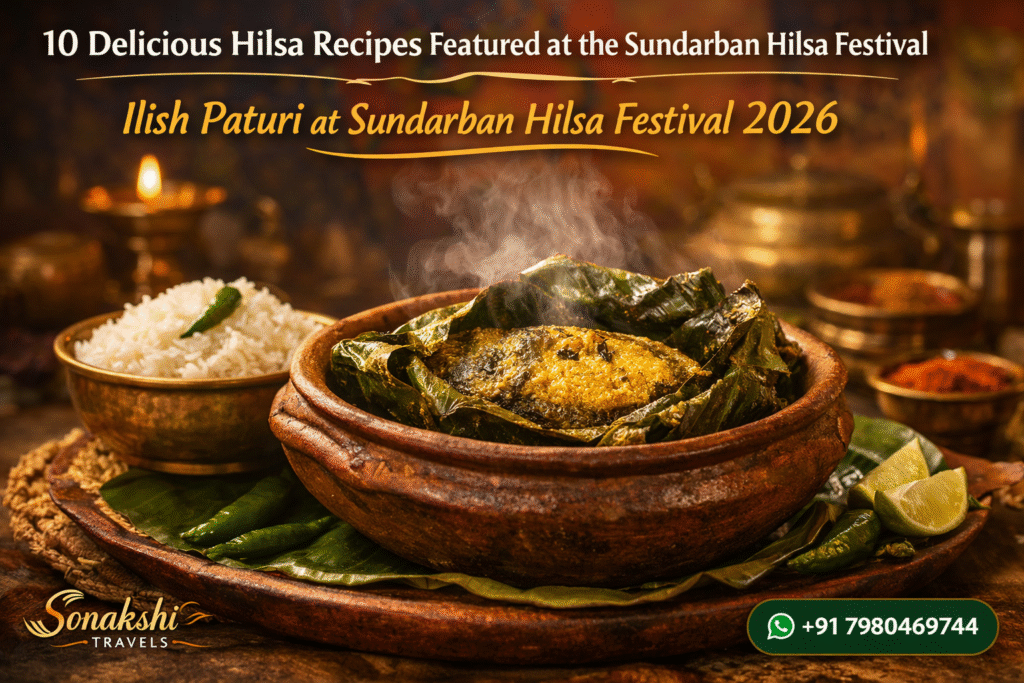
3. Ilish Paturi
Ilish paturi carries a visual and aromatic beauty that is difficult to forget. Pieces of hilsa are coated in mustard paste, often mixed with coconut and green chilli, then wrapped in banana leaf and either steamed or cooked slowly on low heat. When the leaf is opened, a fragrant cloud rises first, and only then does the eye meet the glistening fish inside. That small moment of unveiling adds emotional force to the dish.
At the festival, ilish paturi often feels ceremonial. The banana leaf does more than hold the ingredients together. It gives the preparation an earthy softness and a slightly smoky vegetal note. The wrapping also preserves moisture, so the hilsa remains tender. This dish is especially admired because it combines flavor, texture, aroma, and presentation in one complete experience. It is not merely delicious. It feels carefully composed.
4. Doi Ilish
Doi ilish introduces a different mood. Here the sharpness of mustard gives way to the gentle body of yogurt. The fish is cooked in a creamy mixture of curd, mild spices, and sometimes a light mustard presence, depending on the style of the cook. The yogurt softens the profile of the dish and creates a rounded taste that feels calm and rich.
At the festival table, doi ilish is important because it widens the understanding of what hilsa can become. Not every great hilsa dish must be pungent or fiery. Doi ilish proves that the fish can also carry delicacy and softness. The mild tang of yogurt supports the natural sweetness of the flesh instead of competing with it. This makes the dish appealing to those who enjoy layered flavor without excessive sharpness.
5. Ilish Macher Jhol
Ilish macher jhol is often simpler in structure, yet deeply satisfying. A thin broth made with turmeric, chilli, and sometimes vegetables such as eggplant or potato creates a lighter preparation that allows the fish oil to flavor the entire liquid. This dish may appear less dramatic than paturi or bhapa, but it carries strong emotional meaning because it is closely associated with everyday Bengali cooking.
At the festival, its value lies in honesty. It shows hilsa not as a luxury display, but as part of a living food tradition. The broth becomes rich from the fish itself, and the rice absorbs that flavor beautifully. In many ways, this recipe reminds visitors that culinary heritage is not built only on elaborate dishes. It is also built on daily forms of nourishment that families have trusted for generations.
6. Ilish Tel Jhal
Ilish tel jhal depends on one of the most beloved features of the fish: its oil. In this preparation, the natural oil released by hilsa combines with mustard oil, chilli, and a simple spice structure to create a bold, glossy, intensely flavored dish. The sauce is usually not thick. Instead, it clings to the fish and rice in a way that feels concentrated and powerful.
This recipe receives attention at the festival because it embraces richness rather than hiding it. Hilsa is valued precisely for that oily depth, and tel jhal uses it as a culinary strength. When cooked well, the taste is fiery, savory, and deeply Bengali in spirit. It is the kind of dish that remains on the palate and in memory long after the meal ends.
7. Ilish Polao
Ilish polao shows how hilsa can move from a direct fish preparation into a fuller festive composition. Fragrant rice, mild whole spices, and carefully cooked fish come together in a dish that feels generous and celebratory. The challenge here is to maintain balance. The rice must not overpower the fish, and the fish must not disappear into the richness of the polao.
At the festival, ilish polao often signals abundance. It carries the mood of a special meal arranged with care. Yet its real merit lies in harmony. The fragrance of the rice, the softness of the hilsa, and the underlying richness of the preparation create a dish that feels both complete and refined. It is especially admired by those who enjoy the union of grain and fish in one elegant serving.
8. Smoked or Fire-Kissed Hilsa Preparations
Some festival kitchens also present hilsa with a lightly smoked or fire-kissed character. This may not always follow a single fixed traditional formula, but it draws on older instincts of cooking close to flame, leaf, heat, and aroma. The purpose is not to turn hilsa into something modern for its own sake. It is to reveal another side of the fish through controlled contact with smoke or char.
When done carefully, the result is remarkable. The natural richness of hilsa gains a deeper edge, and the surface carries a faint roasted note while the inside remains soft. This type of preparation often attracts experienced food lovers because it shows confidence. It suggests that the cooks understand the fish well enough to take it beyond the most familiar recipes while still respecting its nature.
9. Ilish Dim Bhaja or Roe Preparations
Hilsa roe is treasured by many Bengali households, and its appearance at the festival adds another layer to the culinary story. Fried roe or roe-based side preparations are often rich, grainy, and full of concentrated flavor. They do not taste like the flesh of the fish. They carry a denser and more intense identity of their own.
Its inclusion matters because it reflects the complete use of the ingredient. Festival cooking is not only about serving the most famous cuts. It is also about honoring the full culinary value of hilsa. Roe preparations bring variation to the table and remind visitors that Bengali fish culture has always depended on careful attention to detail, texture, and the unique identity of every edible part.
10. Lightly Fried Hilsa with Salt, Turmeric, and Green Chilli
Sometimes the purest pleasures are the simplest. A lightly fried piece of hilsa, seasoned only with salt and turmeric, can be extraordinary when the fish is fresh and the frying is controlled. The outside turns gently golden, while the inside remains moist and rich. Often served with green chilli and hot rice, this preparation allows the natural taste of hilsa to stand almost alone.
At the festival, this style of cooking is deeply important because it acts as a reference point. It reminds everyone that before mustard, yogurt, banana leaf, or rice composition, hilsa itself is already a complete ingredient. A simple fry does not hide anything. It reveals quality immediately. That honesty is exactly why it continues to hold its place among more elaborate dishes.
What These Ten Recipes Reveal About the Festival
Seen together, these ten recipes create more than a menu. They create a map of taste. Shorshe ilish speaks of pungency and confidence. Bhapa ilish speaks of restraint. Paturi brings aroma and wrapping tradition. Doi ilish introduces softness. Jhol offers everyday honesty. Tel jhal celebrates richness. Polao suggests festivity. Smoked versions show experimentation within respect. Roe preparations add completeness. Simple fried hilsa restores attention to the ingredient itself.
This variety explains why the culinary side of the festival leaves such a deep mark on visitors. Even those who first arrive through interest in a cultural event, a food-centered celebration, or a carefully planned Sundarban private tour often come away talking most passionately about the recipes. The dishes are not random. They are connected by technique, memory, and the logic of Bengali taste.
The Deeper Cultural Meaning of Hilsa on the Festival Table
Hilsa carries an emotional value that goes far beyond appetite. In Bengali life, it is tied to family meals, festive exchange, seasonal feeling, and inherited preference. People debate the best cut, the best mustard balance, the correct oil level, and the ideal rice pairing with unusual seriousness because hilsa is not neutral food. It is an ingredient with memory attached to it. The festival protects and displays that memory in public form.
That is why these dishes matter even beyond the immediate pleasure of eating. They preserve skill. They keep older flavor structures alive. They allow younger visitors to taste recipes that might otherwise remain limited to a shrinking domestic context. In this way, the food at the festival performs quiet cultural work. It teaches without announcing that it is teaching.
For many people, this becomes one of the most meaningful parts of a larger Sundarban travel agency or festival-related journey into the region. A person may remember the decoration, the social mood, or the setting, but the recipes create the strongest point of return in memory. Taste is often the last thing to fade.
Why the Festival’s Hilsa Menu Feels So Memorable
The answer lies in range and sincerity. The dishes do not feel copied from a fashionable restaurant trend. They feel rooted in a food world that understands the fish from inside. Each recipe respects texture. Each one knows that hilsa must be handled carefully. Each one uses heat, spice, and oil with judgment. That is why the menu feels coherent even when the preparations differ widely.
Anyone looking at the culinary dimension of the festival closely will notice that the food carries the intelligence of tradition. The recipes are delicious, but they are also structured. They reveal how Bengali cooking thinks: how it balances sharp and soft notes, how it uses aroma, how it values the meeting of fish and rice, and how it transforms a beloved river ingredient into many meaningful forms.
In the end, these ten recipes explain why the festival continues to stand out within discussions of food-centered Sundarban ilish utsav culture. The event succeeds not because it offers hilsa in one expected way, but because it allows the fish to appear in multiple voices. Some dishes speak loudly. Some speak softly. Some feel festive. Some feel intimate. Together, they form a complete culinary portrait of hilsa as both heritage and pleasure.
That is what makes the table at the festival so compelling. It is not only full of food. It is full of interpretation. And among all the cultural elements associated with the event, these ten delicious hilsa recipes remain one of the clearest, richest, and most satisfying expressions of its identity.