Sundarban Hilsa Festival 2026 Travel Routes – Compare route options clearly
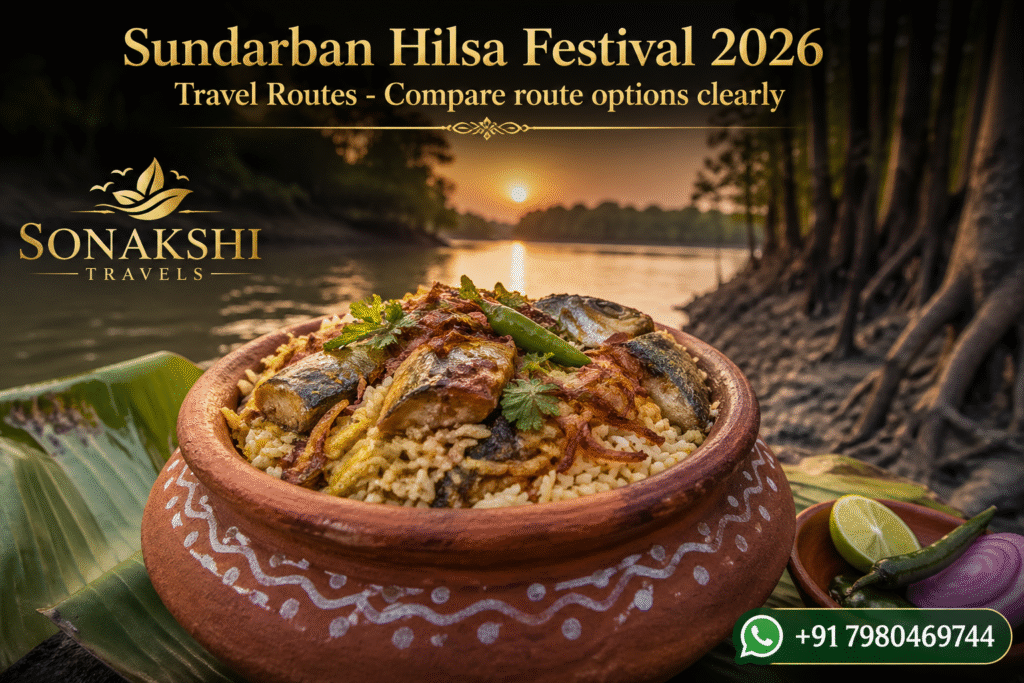
The travel route for the Sundarban Hilsa Festival 2026 is not only a matter of reaching the river delta. It shapes the first feeling of the journey. The roads, river crossings, village edges, ferry points, boat channels, and final approach together create the rhythm of the experience. For visitors planning a hilsa-focused river journey, route selection becomes especially important because the festival mood begins before the meal, before the boat moves deep into the creeks, and before the first wide river view opens in front of the traveller.
The Sundarban is a tide-shaped landscape. Movement here is never fully similar to travel in a city or hill station. A route may look short on a map, but the real experience depends on road condition, jetty access, boat coordination, river width, tidal timing, and the comfort level of the travellers. This is why comparing route options clearly is necessary for anyone planning the Sundarban hilsa festival 2026. A good route reduces confusion, protects the relaxed mood of the journey, and allows the festival experience to unfold in a smooth and memorable way.
Understanding the route-based nature of the festival journey
The Sundarban hilsa festival is closely connected with rivers, food culture, and the emotional character of Bengal’s monsoon-season delta life. The route is therefore not a separate logistical matter. It is part of the festival itself. The visitor moves from urban roads to rural settlements, then from land to water, and finally into the slower rhythm of the estuarine environment. This gradual change is important because it prepares the mind for the softer pace of the Sundarban.
In a normal city-to-destination trip, the road is often treated as an empty transfer. In this case, the road is part of the story. The traveller sees the landscape changing from traffic zones to village markets, ponds, small bridges, embankments, fishing settlements, riverbanks, and mangrove edges. Every route has a different pace and personality. Some routes feel more direct and functional. Some feel more scenic and gradual. Some are better for travellers who want convenience, while others suit those who enjoy a deeper river approach.
When the journey is planned through an experienced Sundarban travel agency, the route is usually selected according to group size, comfort level, boat boarding point, and the intended style of the festival experience. This matters because the hilsa festival journey is not simply about distance. It is about arrival quality. A rushed or badly coordinated route can disturb the calm feeling that the delta naturally offers.
Kolkata to Godkhali route: the most common festival access line
The Kolkata to Godkhali route is one of the most widely used access routes for festival travellers. It is commonly preferred because it gives a practical balance between road movement and boat boarding convenience. For many visitors, especially those choosing a Sundarban tour from Kolkata, this route feels familiar, organized, and easier to manage.
The main strength of the Godkhali route is its established travel flow. The road journey leads the traveller toward one of the principal gateways used for Sundarban boat access. From here, the shift from vehicle to boat is usually clear and manageable. This makes the route suitable for family groups, senior travellers, small private groups, and first-time visitors who want a stable beginning to their river journey.
In terms of experience, this route gives a gradual transition. The road section passes through semi-urban and rural Bengal before arriving near the water-based entry zone. The psychological change is noticeable. City speed slowly reduces. Traffic noise becomes lighter. Settlement patterns become smaller. The traveller begins to sense that the destination is not a single point, but a widening river world.
For the Sundarban ilish utsav, this route works well because food, boat movement, and river atmosphere can be coordinated without unnecessary uncertainty. The route is not the most dramatic in every sense, but it is dependable. For festival planning, dependability is valuable because the core experience depends on comfort, timing, and a relaxed river setting.
Kolkata to Sonakhali route: a practical route with a softer river approach
The Kolkata to Sonakhali route is another important option for travellers comparing access lines. This route is often valued for its practical connection to the river belt and its relatively smooth shift toward boat-based movement. It can feel slightly different from the Godkhali approach because the boarding experience and surrounding settlement pattern may create a softer arrival mood.
For visitors who want the festival journey to feel less mechanical, the Sonakhali route can be appealing. The transition from road to river often feels intimate because the river environment begins to influence the senses more strongly near the boarding zone. Boats, local movement, market sounds, fishing activity, and the wide river surface begin to merge into the travel experience.
This route is suitable for travellers who prefer a journey that still remains practical but carries a stronger local river character. It is also useful when the selected boat arrangement or accommodation coordination is aligned with this side of the delta. A professional Sundarban tour operator may recommend this route when it matches the operational flow of the festival plan.
The main value of this route lies in balance. It does not feel too remote for regular travellers, yet it gives a meaningful sense of entering the river landscape. For the Sundarban ilish utsav 2026, such a route can support a calm and culturally connected travel mood.
Canning-based access: suitable for a more local movement pattern
Canning is an important name in the wider Sundarban access structure. A Canning-based approach may involve rail or road movement up to the town, followed by further local transfer toward the river entry points. This route is different in character because it brings the traveller closer to the everyday movement pattern of people living around the lower delta region.
For some visitors, this route can feel more local and grounded. The railway-town atmosphere, market activity, and onward movement toward river access points create a layered experience. It may not always be the most convenient option for every festival group, but it helps travellers understand how the Sundarban is connected with mainland Bengal through daily movement, supplies, trade, and river dependence.
From an experiential point of view, the Canning route has a documentary quality. It shows the functional side of delta travel. The visitor observes not only tourist movement but also the rhythm of local life. People, goods, fish, vegetables, boats, vans, and small transport systems create a living corridor toward the rivers. This is valuable for travellers who want to feel the social texture of the region.
However, for a festival journey centered on comfort, meal planning, and coordinated boat movement, this route needs careful handling. It is better suited when the transfer plan is clear and when the traveller understands that local movement may feel more active and less private. For visitors selecting a Sundarban travel package, this route should be checked carefully in relation to the final boarding point and comfort expectation.
Road-first routes compared with river-first feeling
When comparing Sundarban Hilsa Festival routes, one useful way to think is not only by place names but by travel feeling. Some routes are road-first. They keep the traveller on land for a longer time and make the river transition later. Other routes create a stronger river-first feeling by bringing the visitor closer to boat movement earlier in the journey.
A road-first route is usually better for travellers who value predictability. Families, elderly guests, and groups carrying luggage often prefer this pattern. The road movement may feel longer, but it keeps the early part of the journey simple. Once the boat is boarded, the river experience begins in a more settled way. For a Sundarban tour connected with a festival meal, this can be a sensible choice.
A river-first feeling, on the other hand, is more atmospheric. The traveller feels the delta earlier. The movement of the boat, the smell of wet mud, the sound of river water, and the sight of mangrove edges become part of the arrival. This style can make the festival more immersive, especially for guests who are not in a hurry and want the landscape to slowly shape their mood.
Neither option is automatically better. The right route depends on the traveller’s purpose. A hilsa festival journey should feel calm, not complicated. If the route adds stress, it weakens the experience. If the route adds rhythm, it strengthens the memory.
Private route planning for a quieter festival experience
A private route plan changes the nature of the journey. Instead of moving with a general group rhythm, travellers can follow a more controlled path from departure to boarding. This is especially useful for guests who want silence, flexible stops, smoother transfers, and a more personal river experience. A Sundarban private tour often depends strongly on route planning because privacy begins before the boat journey starts.
For the hilsa festival, private route planning can help maintain comfort around food arrangements, boat timing, and guest movement. Since the festival experience is linked with dining, river observation, and relaxed conversation, the journey should not feel crowded or rushed. A well-planned private route gives the group more control over pace and arrival.
An exclusive Sundarban private tour may use the same broad access corridors as regular routes, but the experience becomes different because the transfer is handled with greater attention. The vehicle, jetty coordination, boat boarding, and river movement can be aligned to reduce waiting and confusion.
This does not mean private routes are only about luxury. They are also about mental space. The Sundarban is a landscape where silence has value. When the journey is less crowded, the traveller can observe more carefully. The river feels wider. The breeze feels more present. The festival meal feels less like a schedule and more like a cultural experience.
Luxury route selection and comfort-based arrival
For travellers choosing a Sundarban luxury tour, the route must support comfort from the first stage. Luxury in the Sundarban is not only about rooms or meals. It is also about how smoothly the traveller moves through the changing geography. A difficult transfer can reduce the premium feeling even when the later arrangements are good.
A comfort-based route gives importance to vehicle quality, road smoothness, waiting time, safe boarding, and clear handover from land to boat. The traveller should not feel uncertain about where to go next. The best route for a luxury festival experience is usually the one that reduces physical strain and allows the visitor to remain mentally relaxed.
A Sundarban luxury private tour should also consider the emotional tone of arrival. Guests looking for a refined experience may prefer less crowded boarding zones, better coordination, and a route that avoids unnecessary disorder. In the Sundarban, luxury is often quiet. It is found in smooth movement, clean timing, calm service, and a river journey that does not feel forced.
When the route is well selected, the hilsa festival experience becomes more elegant. The guest can focus on river views, food tradition, boat movement, and the soft soundscape of the delta instead of worrying about transfer details.
How route choice affects the festival mood
The mood of the Sundarban ilish utsav is built through small sensory changes. The traveller leaves behind the speed of the city and enters a region where water controls movement. Route choice affects how naturally this change happens. A good route allows the mind to slow down step by step.
If the route is too rushed, the traveller may reach the boat physically but not mentally. The body arrives, but the mind remains busy. If the route is too confusing, the festival starts with irritation. But if the road, transfer, and river entry are smooth, the traveller becomes ready to receive the experience properly.
The Sundarban has a strong rhythm of pause and movement. Boats move, then slow down. Rivers open, then narrow. Villages appear, then disappear behind mangrove edges. This rhythm should be respected in route planning. The best route is not always the shortest one. It is the one that matches the emotional speed of the destination.
This is why the route for the Sundarban Hilsa Festival 2026 should be selected with care. The journey should feel like a gradual entrance into a river culture, not like a simple transfer from one point to another.
Comparing routes by traveller type
Different travellers need different route experiences. A family group may prefer a clear and comfortable access line with less uncertainty. A couple may prefer a quieter and more scenic route. A senior traveller may need smoother boarding and fewer changes. A photography-focused traveller may enjoy a route that offers more river atmosphere during arrival.
For a family group, the Godkhali route is often practical because of its established travel pattern. It helps reduce confusion and makes coordination easier. For travellers who want a slightly softer river character, the Sonakhali approach can feel more intimate. For those interested in local movement and everyday delta life, a Canning-based access pattern may feel more observational.
A Sundarban couple private tour may benefit from a route that gives more privacy and less crowd exposure. The journey should feel peaceful and unhurried. A Sundarban private boat tour may also use route selection to create a smoother connection between land transfer and river experience.
For larger groups, route simplicity becomes important. Too many changes can disturb the group rhythm. For smaller private groups, route flexibility becomes more valuable. They can choose a path that feels more personal and atmospheric. The key is to match the route with the nature of the travellers, not only with the map distance.
Ecological awareness along the route
The route toward the Sundarban Hilsa Festival also reveals ecological transitions. The traveller moves through a landscape shaped by rivers, silt, embankments, brackish water influence, fishing practices, and mangrove-linked livelihoods. Even before entering deeper river channels, the land begins to show signs of delta life.
This ecological reading is important because the festival is not separate from the river system. Hilsa itself is connected with water movement, estuarine conditions, and Bengal’s long food culture. The journey toward the festival therefore becomes more meaningful when the traveller observes the environment carefully.
The embankments, ferry points, fish markets, and riverside settlements all show how people live with water. The route teaches without giving a lecture. It shows that the Sundarban is not only a scenic destination but a working delta. Its routes carry people, food, boats, fuel, fish, stories, and seasonal expectations.
When a Sundarban travel plan respects this ecological setting, the festival experience becomes deeper. The visitor does not see the hilsa meal as an isolated attraction. Instead, the meal becomes part of a larger river culture.
Clear comparison of major route options
Godkhali route
The Godkhali route is best understood as the dependable access route. It is suitable for travellers who want a known movement pattern, practical boat boarding, and a smoother start to the festival experience. It is especially useful for first-time visitors, family groups, and guests who want clear coordination.
Sonakhali route
The Sonakhali route offers a practical but slightly softer river mood. It can feel more connected to local water movement and may suit travellers who want a calm transition into the delta. It works well when the selected boat and hospitality arrangement are aligned with this access side.
Canning-based route
The Canning-based route has a stronger local character. It may be suitable for travellers who want to observe the everyday movement of the delta region. However, for festival comfort, it needs careful planning because transfer stages may feel more active and less private.
Private coordinated route
A private coordinated route is best for travellers who want control, privacy, silence, and smoother transitions. It is especially suitable for a Sundarban private tour package where the journey must support comfort from the beginning.
Final route selection for a balanced festival experience
The best route for the Sundarban Hilsa Festival is the one that matches the traveller’s comfort, group type, boarding arrangement, and desired atmosphere. There is no single route that is perfect for everyone. A route must be judged by how smoothly it carries the traveller from city speed into river rhythm.
For dependable access, Godkhali remains a strong choice. For a softer river-side feeling, Sonakhali can be attractive. For a more local movement pattern, Canning-based access has value. For privacy and comfort, a private coordinated route is often the most refined option.
Travellers planning the Sundarban hilsa festival should therefore compare routes not only by distance but by experience quality. The right route protects time, reduces stress, supports the festival mood, and allows the river landscape to reveal itself naturally.
A well-chosen route turns the journey into part of the celebration. The road, the jetty, the boat, the river, and the quiet delta air all become connected. This is the real value of clear route comparison for the Sundarban Hilsa Festival 2026: it helps the traveller arrive not only at a place, but into the true rhythm of the Sundarban.