
Sundarban Tour for Wildlife Exploration
A journey through the Sundarbans feels different from most wildlife trips in India. The landscape does not open with dramatic mountains or wide grasslands. Instead, the experience begins quietly. Long rivers stretch across the horizon, mangrove roots rise from the mud like natural sculptures, and the forest appears endless and mysterious. A Sundarban tour for wildlife exploration is not about rushing from one sight to another. It is about slowly entering an ecosystem where land and water constantly reshape each other.
Travelers who arrive here soon realize that the forest reveals its life in subtle ways. A sudden movement on a muddy riverbank, the distant call of a bird, or the silent glide of a crocodile through tidal water can transform an ordinary moment into a remarkable wildlife encounter. Patience becomes the key to understanding this unique environment.
Why the Sundarbans Is One of the World’s Most Unique Wildlife Destinations
The Sundarbans is the largest mangrove forest on Earth, spread across the delta formed by the Ganges, Brahmaputra, and Meghna rivers. This immense landscape of tidal channels, islands, and dense mangrove vegetation supports an extraordinary range of wildlife species. Unlike traditional forests, the terrain here changes with the tides. Riverbanks appear and disappear, creeks open into hidden waterways, and mudflats become feeding grounds for birds.
Because of these dynamic conditions, wildlife in the Sundarbans has adapted in fascinating ways. Animals must survive in both land and water environments, and many species have developed unique behaviors to thrive in this constantly shifting ecosystem. For travelers interested in wildlife exploration, this makes the region both challenging and deeply rewarding.
Wildlife Species That Make the Sundarban Tour Special
One of the main reasons travelers choose a Sundarban tour is the possibility of encountering rare and remarkable animals. The forest is home to the famous Royal Bengal Tiger, which has adapted to the mangrove environment and is known for its ability to swim across rivers and creeks. Although tiger sightings are rare, the presence of this powerful predator shapes the entire ecosystem.
Other wildlife species appear more frequently during boat safaris. Estuarine crocodiles rest quietly along muddy banks, spotted deer move in small groups near the forest edge, and wild boars search for food in mangrove clearings. The waterways also host river terrapins, monitor lizards, and occasional sightings of fishing cats.
Birdlife adds another vibrant layer to the experience. Kingfishers flash bright colors across the water, brahminy kites circle above tidal channels, and herons stand motionless in the shallow creeks waiting for fish. For birdwatchers, the Sundarbans offers an extraordinary diversity of species throughout the year.
Exploring the Mangrove Rivers by Safari Boat
Unlike many wildlife reserves where visitors travel by jeep, exploration in the Sundarbans happens almost entirely by boat. Wide wooden safari boats move slowly through the tidal rivers, allowing travelers to observe the forest from a unique perspective. The gentle movement of the boat creates a calm atmosphere where the sounds of nature become more noticeable.
As the boat glides along the waterways, travelers often see animals emerging from the mangrove edges. Deer come to drink from the river, crocodiles slide silently into the water, and birds move between branches above the creeks. This style of exploration allows visitors to experience the forest without disturbing its delicate balance.
Watchtowers and Wildlife Observation Points
Several watchtowers within the protected zones of the Sundarbans offer opportunities to observe wildlife from a safe vantage point. These towers overlook forest clearings or freshwater ponds where animals frequently gather. Travelers climb the wooden structures and quietly scan the surrounding landscape for movement.
Locations such as Sajnekhali, Sudhanyakhali, and Dobanki are particularly popular for wildlife viewing. From these observation points, visitors can sometimes spot deer grazing in open areas, birds nesting in mangrove branches, or reptiles basking in the sun. Even when animals remain hidden, the panoramic views of the forest create a powerful sense of immersion.
The Rhythm of Tides and Its Influence on Wildlife
One of the most fascinating aspects of a Sundarban tour is the influence of tidal movements on wildlife activity. Every day, water levels rise and fall dramatically across the delta. When the tide rises, many animals retreat deeper into the forest. As the tide recedes, mudflats and riverbanks appear, attracting birds and other species searching for food.
Understanding this rhythm helps guides plan safari routes carefully. Early mornings and late afternoons often provide the best conditions for wildlife observation. During these quieter hours, the forest becomes more active and the rivers reflect the soft colors of the changing sky.
Birdwatching in the Sundarbans
For many travelers, birdwatching becomes one of the most memorable parts of the journey. The mangrove environment attracts both resident and migratory birds. Winter months bring additional species that travel thousands of kilometers to reach these tidal forests.
Birdwatchers often carry binoculars and cameras while moving through the rivers. A sudden flash of blue might reveal a kingfisher diving for fish, while a distant silhouette against the sky could belong to an eagle scanning the water below. Each sighting adds another small discovery to the overall experience of the tour.
A Quiet Moment in the Mangrove Wilderness
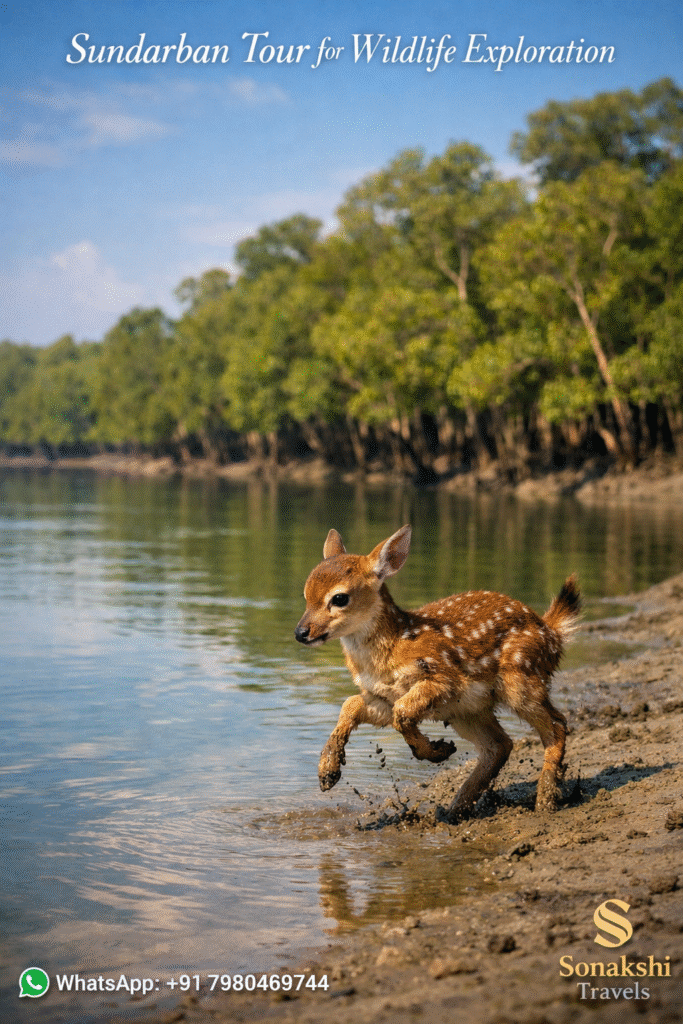
During one afternoon safari, the boat slowed near a narrow creek surrounded by thick mangrove roots. The water was calm and almost mirror-like. Suddenly, a spotted deer stepped carefully onto the muddy bank to drink. Everyone on the boat remained silent, watching the delicate moment unfold. Within seconds, the deer lifted its head, sensed movement, and disappeared into the forest.
Moments like these define wildlife exploration in the Sundarbans. They are brief, unpredictable, and deeply memorable. The forest does not perform on command; it reveals its life quietly to those who observe patiently.
Mangrove Wild
Where rivers wander through silent green,
And tides redraw the forest scene,
The mangrove roots hold stories deep,
Of creatures waking from tidal sleep.
Bird wings flash in the morning light,
A crocodile drifts just out of sight,
The forest breathes with water and air,
Life moves quietly everywhere.
In this wild land of tide and tree,
Nature speaks in mystery.
Preparing for a Meaningful Wildlife Journey
A successful wildlife exploration in the Sundarbans requires patience and awareness. Travelers often bring binoculars, cameras with zoom lenses, and light clothing suited for warm coastal weather. Listening carefully to the guide’s observations can also make a significant difference. Experienced guides understand animal behavior and often recognize subtle signs that visitors might miss.
Equally important is maintaining respect for the environment. The Sundarbans is a fragile ecosystem where human activity must remain carefully controlled. Responsible tourism helps protect this extraordinary landscape so that future generations can continue to experience its wildlife.
The Lasting Memory of a Sundarban Wildlife Tour
Long after the journey ends, travelers often remember the quiet moments rather than dramatic sightings. The gentle sound of water against the boat, the distant call of birds echoing across the rivers, and the feeling of moving through one of the world’s most unusual forests stay in memory.
A Sundarban tour for wildlife exploration offers more than the chance to see animals. It provides an opportunity to observe a living ecosystem where rivers, forests, and wildlife exist in delicate balance. For those who appreciate nature in its most authentic form, the Sundarbans becomes a place that continues to linger in the mind long after the journey ends.