Sundarban Tour Is Ideal for Weekend Wildlife Photography
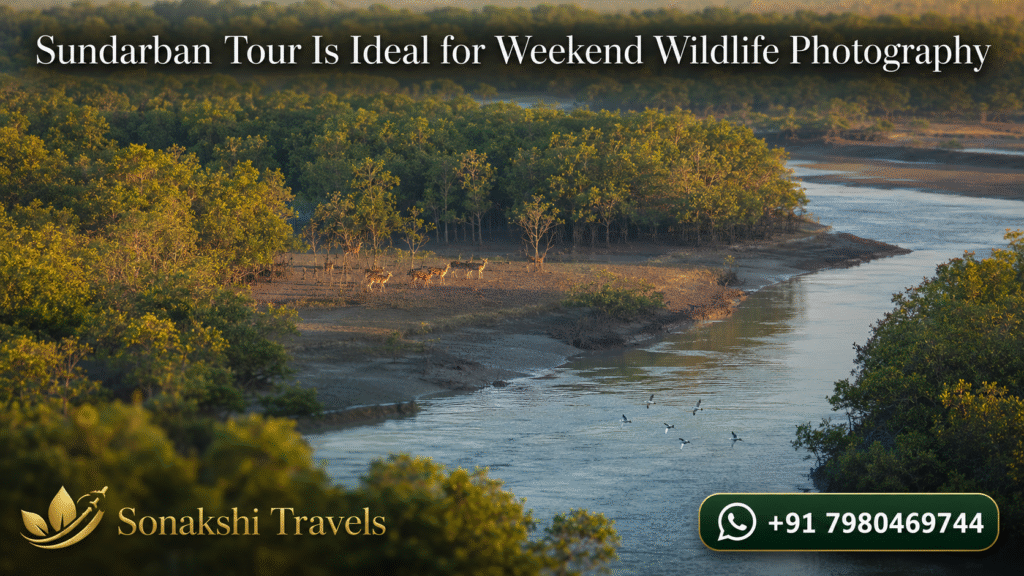
A weekend Sundarban tour gives wildlife photographers an opportunity to work in one of India’s most distinctive natural environments. The landscape is formed by tidal rivers, narrow creeks, mangrove forests, exposed mudbanks and changing channels. Instead of searching for wildlife from a road or an open grassland, photographers observe the forest mainly from a boat. This difference creates unusual compositions and requires a patient, thoughtful approach.
The value of such a trip does not depend only on photographing a Royal Bengal tiger. Birds, spotted deer, rhesus macaques, wild boars, estuarine crocodiles, water monitor lizards, mudskippers and changing mangrove scenery can all become meaningful subjects. Reflections on the river, layers of mangrove vegetation and the daily movement of boats also offer strong environmental photographs.
A short photography trip can be productive when its different parts are properly coordinated. Boat movement, forest permissions, food service, accommodation, guide support and equipment protection must work together. A well-managed journey helps photographers remain attentive to light, behaviour and composition instead of dealing with avoidable practical problems.
Why a Sundarban Tour Suits Weekend Wildlife Photography
The Sundarban is suitable for a short photography break because several types of subjects can be observed from the same river-based route. A photographer may begin with a wide view of mangrove-lined water and later notice a kingfisher, heron, crocodile or group of spotted deer along the bank. This variety allows a compact trip to produce landscapes, wildlife portraits, bird photographs and environmental frames.
The river is also an important part of every composition. Water creates reflections, separates the boat from the forest and provides open space around wildlife subjects. A crocodile resting on a mudbank, for example, can be photographed together with its tidal habitat. Such a frame often explains more about the animal than a tightly cropped portrait.
The relationship between the waterways and wildlife is explored further in Sundarban Tour Combines Scenic Waterways with Rich Biodiversity. This ecological connection is especially valuable for photographers who want their pictures to show where and how an animal lives.
A weekend visit also encourages photographers to work with concentration. The available time is limited, so careful observation becomes more important than covering a long list of places. Waiting quietly near a promising forest edge, watching bird movement and studying changes in the riverbank can produce better results than rushing from one location to another.
Photography in a Tidal and River-Based Forest
Wildlife photography in the Sundarban is different from photography in a land-based national park. The boat is both the viewing platform and the main working space. Subjects may appear on either bank, above the canopy, near the water or behind mangrove roots. Photographers must therefore remain alert while keeping their equipment organised and secure.
The moving boat introduces a practical challenge. Even when the river looks calm, small vibrations can affect image sharpness. A fast shutter speed is often useful for birds, moving animals and handheld telephoto work. Image stabilisation can help, but it cannot correct every movement. Good support, steady posture and careful timing remain important.
Distance is another major factor. Forest rules and safe navigation determine how closely a boat can approach a bank or animal. A suitable telephoto lens helps photographers record distant wildlife without disturbing it. A second camera or a wider lens can be useful for landscapes, boats, mangrove patterns and sudden subjects appearing closer to the vessel.
Photographers should also be prepared for rapid changes in perspective. As the boat turns through a creek, the background, viewing angle and direction of light can change within moments. The strongest image may appear before the boat reaches the subject or after it begins moving away. Communicating quietly with the boat crew helps everyone understand when a slower movement is needed and when stopping is legally and safely possible.
Wildlife Subjects Beyond the Royal Bengal Tiger
The tiger remains an important symbol of the Sundarban, but it should never be treated as a guaranteed photographic subject. Tigers live across a difficult tidal habitat and may remain concealed within dense vegetation. A responsible photographer accepts this uncertainty and observes the wider ecosystem with equal interest.
Birdlife provides some of the most dependable photographic opportunities. Kingfishers, egrets, herons, cormorants, brahminy kites and other resident or visiting species may be seen around creeks and mudbanks. Birds can appear suddenly, so the camera should be ready with practical exposure settings. Watching their direction of flight and feeding behaviour can improve the chance of capturing a clean frame.
Estuarine crocodiles are another important subject. They may rest on exposed banks or remain partly submerged near the water. A low position from the boat can make the animal appear connected with the river and mangrove background. The article Sundarban Tour Offers Unique Views of Crocodiles and Water Birds provides useful context for understanding why these subjects are central to the region’s visual identity.
Spotted deer can create attractive environmental photographs when they appear near mangrove edges. Rhesus macaques, wild boars and water monitor lizards also deserve attention. Even smaller subjects such as mudskippers, crabs and patterns left by tidal movement can strengthen a photographic story about life in the delta.
A productive photographer does not divide sightings into important and unimportant categories. Instead, each subject is considered in relation to habitat, behaviour, light and composition. This broader approach makes a short photography journey more rewarding and prevents disappointment when a rare animal remains unseen.
Planning a Focused Weekend Photography Experience
Careful planning is necessary because the Sundarban is permit-sensitive, river-based and dependent on several connected services. Forest entry procedures must be handled correctly, and the boat must follow authorised routes and operating rules. Meals, drinking water, accommodation and equipment space also need advance coordination.
A reliable Sundarban travel agency should understand that photographers have different needs from ordinary sightseeing groups. They may require quieter movement, a clear viewing area, sufficient room for camera bags and realistic time for observing a subject. These requirements should be discussed before the booking is confirmed.
Those arranging a Sundarban tour from Kolkata should consider the complete working period rather than only the number of nights. Delays in coordination can reduce useful photography time. Clear arrangements allow the group to begin river exploration with permits, food and boat services already organised.
The selected Sundarban tour package should explain what is included and how the river safari will be managed. Photographers should ask about boat capacity, seating arrangement, guide support, accommodation category, meals, drinking water, life jackets and protection from spray. Clear information prevents misunderstandings and helps travellers carry appropriate equipment.
Keeping the Group Size Practical
Group size directly affects photography comfort. Too many people on a small boat can restrict movement, create vibration and block viewing angles. It can also become difficult to turn quickly when wildlife appears on the opposite bank. A practical group size allows photographers to change positions safely without disturbing others.
A Sundarban private tour can be useful for serious photographers because the boat routine can remain centred on patient observation, subject to forest rules and navigational safety. The purpose is not to demand access to restricted areas. It is to create a quieter working environment and reduce conflict between photography and general sightseeing expectations.
Travellers considering a Sundarban private tour package should confirm the usable deck area and the number of participants. A private label alone does not guarantee sufficient working space. The actual boat layout matters more than a broad package description.
Choosing and Protecting Photography Equipment
A telephoto zoom lens is practical for a short visit because wildlife distance can change quickly. A wider lens is helpful for river landscapes, mangrove patterns and photographs that place animals within their surroundings. Carrying two camera bodies may reduce frequent lens changes, but equipment should remain manageable within the available boat space.
Moisture and river spray require attention. Cameras and lenses should be kept in padded, water-resistant bags when they are not being used. Simple rain covers, dry cloths and secure lens caps can protect equipment during sudden spray or light moisture. Silica gel packets may help manage humidity inside closed bags.
Extra batteries and memory cards are important because charging opportunities may be limited during active river hours. Cards should be stored in a dry, labelled case. It is also sensible to separate used and unused cards so that valuable files are not accidentally overwritten.
A monopod can be more practical than a large tripod on some boats, although its usefulness depends on deck layout and available room. Photographers should avoid placing equipment where it can block movement or create a safety risk. Camera straps must remain secure, especially when changing position or working near the edge of the vessel.
The Importance of the Boat, Guide and Crew
The quality of wildlife photography depends greatly on the boat team. An experienced boatman understands currents, creek width, safe positioning and permitted stopping points. A knowledgeable guide can notice distant movement, recognise bird calls and explain animal behaviour. Their local understanding helps photographers prepare before a subject becomes clearly visible.
Communication should remain quiet and respectful. Loud instructions may disturb wildlife and reduce the experience for other visitors. Before entering the forest, photographers can explain their preferred signals for slowing down, indicating a subject or changing position. This simple preparation reduces confusion during brief sightings.
The boat should provide a stable and uncluttered viewing area. Railings, roof supports and crowded seating can influence composition, so photographers should understand the layout in advance. No boat can remain completely still on a tidal river, but careful handling can reduce unnecessary movement.
A responsible Sundarban Hilsa tour operator should never encourage the crew to break forest rules for a photograph. Chasing animals, approaching unsafe banks, entering restricted creeks or using food to attract wildlife is unacceptable. The photograph must remain secondary to animal welfare, visitor safety and legal compliance.
How Food, Stay and Service Coordination Support Photography
Food and accommodation may appear separate from photography, but poor coordination can interrupt the most useful working hours. Meals should be hygienic, timely and suitable for the group. Drinking water must remain easily available on the boat. When these basic needs are organised, photographers can concentrate on observation without unnecessary distraction.
Accommodation should offer a clean resting environment and a safe place for equipment. Photographers may need time to charge batteries, review files and prepare cameras for the next forest session. Reliable electricity arrangements and secure storage are therefore more relevant than decorative facilities.
A luxury Sundarban tour may provide additional room comfort and more personalised service, but luxury should not be confused with closer wildlife access. Forest rules apply equally to every visitor. Higher comfort can improve rest and equipment management, yet the natural experience remains dependent on patience, responsible navigation and wildlife behaviour.
Similarly, a Sundarban luxury tour package should be assessed according to service coordination, boat suitability and guide quality. Accommodation alone cannot determine the value of a wildlife photography trip. The strongest arrangement connects comfort with practical support for time spent on the river.
Reading Light, Habitat and Animal Behaviour
Wildlife photography improves when the photographer studies the whole scene before pressing the shutter. Mangrove forests contain complex branches, roots and leaves that can distract from the subject. A small change in boat position may create a cleaner background or separate an animal from dense vegetation.
Light reflected from the water can brighten the lower part of a subject, while shaded forest edges may require careful exposure. Birds with white feathers can easily lose detail when photographed against dark mangroves. Checking the histogram and adjusting exposure compensation can help preserve highlights without making the image unnaturally dark.
Animal behaviour often gives advance warning of a photographic moment. A kingfisher leaning forward may be preparing to dive. A deer looking repeatedly in one direction may have noticed movement. A crocodile lifting its head may soon change position. Patient observation allows the photographer to anticipate action instead of reacting after it has happened.
Understanding different visual perspectives is especially important in this landscape. Sundarban Tour Helps You Discover Forests from a Different Angle reflects the value of viewing the mangrove environment from the waterways, where forest layers, banks and wildlife appear in constantly changing relationships.
Photography Suitability for Families, Couples and Small Groups
A weekend photography visit can suit families when expectations and equipment needs are balanced. Children should remain supervised on the boat and must follow safety instructions. Long periods of quiet observation may not suit every young traveller, so the group should agree on a comfortable working rhythm.
A family Sundarban tour works best when photography does not prevent other members from enjoying the forest. Shared binoculars, simple wildlife identification and occasional landscape photography can help everyone remain involved. A private arrangement may provide more flexibility, but all decisions must continue to follow forest timing and boat safety rules.
Couples with a shared interest in nature photography may prefer a calm and comfortable arrangement with sufficient space for two sets of equipment. Senior citizens can also participate when the boat has safe seating, easy movement and suitable boarding support. Their comfort should be discussed openly during planning rather than assumed.
An affordable Sundarban tour can still support good photography if the boat is not overcrowded and basic services are reliable. Expensive equipment or premium accommodation does not automatically produce better photographs. Preparation, field awareness and patience have a greater influence on results.
Responsible Wildlife Photography in the Mangroves
Responsible photography begins with maintaining distance. Wildlife should not be surrounded, followed aggressively or pressured into changing direction. Photographers must accept that branches, distance or poor visibility may sometimes prevent a clear image. No photograph is important enough to disturb an animal or compromise safety.
Flash should not be used to disturb wildlife, particularly birds and animals resting in shaded areas. Recorded calls should not be played to draw birds closer. Food must never be offered to attract an animal. These practices can alter natural behaviour and create avoidable stress.
Noise control is equally important. Quiet conversation, limited movement and muted electronic sounds create a better environment for observation. Photographers should disable unnecessary camera beeps and avoid shouting when a subject appears. Calm behaviour also helps everyone on the boat respond in an organised manner.
Waste must remain on the vessel until it can be disposed of properly. Plastic wrappers, bottles, food remains and cigarette waste have no place in the river or forest. Wildlife photography claims to value nature; responsible conduct must support that claim.
Images should also be presented honestly. Captions should not invent rare sightings or imply that an animal was photographed at an unsafe distance. Sensitive location details may need to be withheld when sharing photographs publicly. Ethical storytelling protects both wildlife and the credibility of the photographer.
Setting Realistic Expectations for a Short Photography Trip
A successful photography weekend should not be measured only by the number of species photographed. Wildlife remains unpredictable, and dense mangroves can conceal animals even when they are nearby. Some encounters may last only a few seconds, while other stretches of the river may appear quiet.
Realistic expectations help photographers notice smaller details. Mangrove roots exposed by the tide, a fishing eagle crossing the river, deer tracks on wet mud or the reflection of a forest edge can all contribute to a complete visual record. These images explain the character of the delta more effectively than a collection of disconnected animal portraits.
The best Sundarban tour for photography is therefore not one that promises a tiger. It is one that provides legal access, a suitable boat, knowledgeable support, sufficient observation time and honest communication. Wildlife sightings remain a natural possibility, never a guaranteed product.
How to Select the Right Photography-Focused Arrangement
Before booking, photographers should explain their purpose clearly. A casual visitor carrying a mobile phone has different requirements from a group using telephoto lenses, multiple camera bodies and support equipment. The organiser should understand the number of photographers, approximate equipment load and expected level of flexibility.
Useful questions should cover boat capacity, unobstructed viewing space, guide experience, permit handling, meal timing, charging arrangements and equipment security. Travellers should also confirm whether the group will be mixed with general tourists. These details influence working comfort more than decorative package descriptions.
Anyone planning to book Sundarban travel should avoid claims of guaranteed tiger photography or unrestricted access. Such promises do not reflect the reality of a protected mangrove forest. Transparent information about limitations is a sign of professional planning.
A premium arrangement may be suitable for photographers who need additional privacy, personalised meal service and comfortable rest between river sessions. However, a premium Sundarban private tour package should still be evaluated through practical details. Privacy is useful only when the boat, crew and daily coordination genuinely support careful photography.
The final choice should match the photographer’s working style. Some travellers prefer a simple, shared experience, while others need a private boat and quieter environment. Neither format is automatically superior. The right decision depends on group size, equipment, comfort needs and the seriousness of the photographic objective.
Making a Weekend Sundarban Tour Photographically Meaningful
A weekend Sundarban tour can be highly suitable for wildlife photography when it is planned around patience, practical coordination and respect for the forest. The river-based setting provides distinctive views of birds, crocodiles, deer, smaller creatures, mangrove vegetation and changing tidal landscapes. These subjects allow photographers to build a rich visual story without depending on a single rare sighting.
The most important elements are a suitable boat, manageable group size, experienced guidance, correct permissions, protected equipment and realistic expectations. Food, accommodation and service arrangements should support the photography experience without becoming its main purpose. Comfort matters because it helps travellers remain attentive, prepared and safe.
Above all, photography must remain ecologically responsible. Quiet observation, honest storytelling and respect for legal distance protect the animals and the wider mangrove environment. When these principles guide the journey, even a short Sundarban tour can produce meaningful photographs and a deeper understanding of one of India’s most complex wildlife habitats.