Sundarban Ilish Utsav Food Highlights – Must-try hilsa preparations
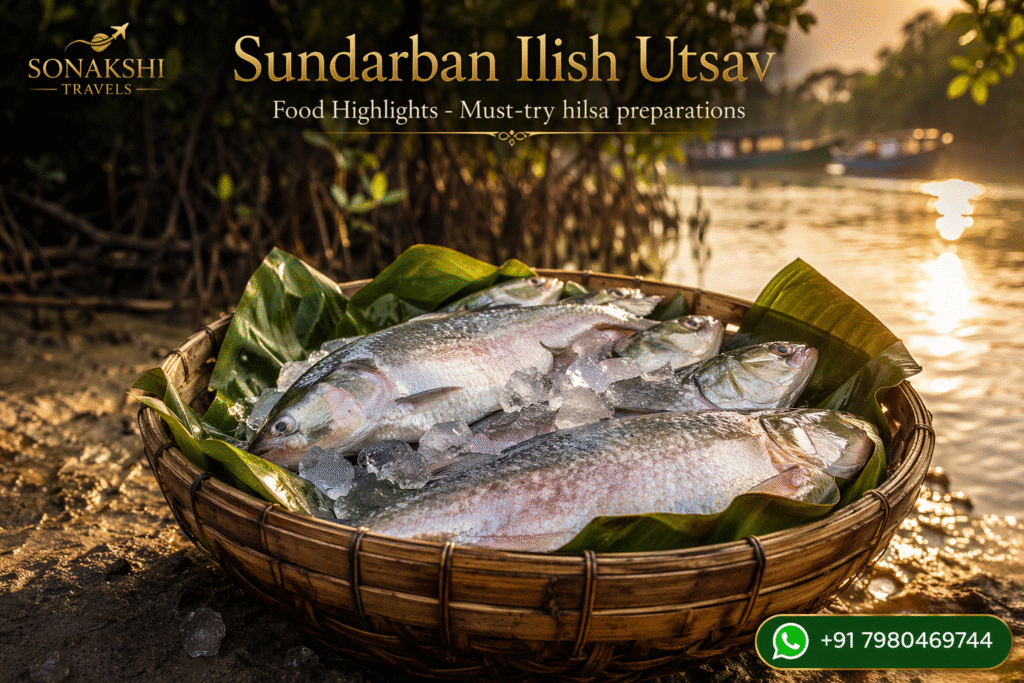
The true character of a hilsa festival is not understood by looking at the fish alone. It is understood by observing how the fish is cleaned, how the mustard is ground, how the oil is heated, how the aroma rises from the cooking pot, and how each preparation reveals a different side of the same ingredient. In the dining experience of the Sundarban hilsa festival, hilsa is not treated as an ordinary seasonal dish. It is presented as a culinary sequence. Every preparation has its own texture, rhythm, intensity, and emotional effect on the eater.
That is what makes the food segment of the festival memorable. One dish may highlight softness, another may show depth of oil and spice, another may preserve the clean marine sweetness of the fish, and another may celebrate the famous relationship between hilsa and mustard. In many cases, the same guest discovers that hilsa does not taste like one fixed thing. It changes with cooking medium, cut style, heat level, gravy density, and even serving order. This layered food experience is one of the strongest reasons why the Sundarban hilsa festival 2026 continues to attract people who want more than a simple lunch based on one celebrated fish.
Why hilsa becomes the center of the table
Hilsa holds a rare place in Bengali food culture because it combines delicacy and richness in the same body. The flesh is soft but not weak. The oiliness is deep but not dull. The smell is distinct, and when handled properly, it carries a river-and-sea identity that many fish cannot offer. During the Sundarban ilish utsav, these qualities become even more important because the cooking is designed to respect the natural character of the fish instead of hiding it under excessive spice.
From a culinary point of view, hilsa behaves differently from firm white fish. It demands restraint. Too much frying can dry the surface. Too much gravy can bury its natural oil. Too much masala can overpower its fragrance. That is why the most satisfying festival preparations are usually those that allow the fish to remain at the center. Even when multiple ingredients are added, the cooking logic remains clear: the fish must still speak first.
Guests who join a food-focused river journey, whether as part of a broader Sundarban tour or through a specialized seasonal dining experience, often remember one important detail. Hilsa is not impressive because it is expensive or famous. It is impressive because each traditional preparation reveals a new structure of flavor. One cut can feel creamy near the belly, another more balanced near the middle, another sharper and more mineral near the bone. This variety gives depth to the overall meal.
Bhapa ilish – the quiet power of steam and mustard
Among all hilsa preparations, bhapa ilish often becomes the emotional favorite because it is both gentle and intense. The cooking method appears simple, but the result depends on precision. Fresh mustard paste, green chili, salt, and mustard oil come together in a thin coating around the fish. Then steam slowly transforms this mixture into a fragrant layer that stays close to the flesh rather than becoming a separate gravy. When the lid is opened, the aroma is sharp, warm, and unmistakably Bengali.
The success of bhapa ilish lies in balance. The mustard must remain bright, not bitter. The chili must add a lifted heat, not a burning force. The oil must enrich the fish, not drown it. When properly prepared, the fish flakes with almost no resistance, yet still holds shape. Each bite begins with mustard pungency and ends with the mellow richness of hilsa oil.
At the table, bhapa ilish often creates a moment of silence. This happens because the dish asks for attention. One does not rush through it. The eater carefully negotiates bones, rice, mustard, and fish in small portions. That slow eating pattern becomes part of the pleasure. Within the culinary spread of the Sundarban ilish utsav 2026, bhapa ilish usually represents refinement rather than excess. It proves that a festival dish can feel rich without becoming heavy.
Sorshe ilish – the signature preparation that defines expectation
If bhapa ilish is subtle in structure, sorshe ilish is more direct in personality. This is the preparation that many people imagine first when they hear the words hilsa festival. It is bold, aromatic, and deeply rooted in Bengali food memory. In this dish, mustard is not only a supporting ingredient. It forms the main body of the gravy. Depending on the kitchen style, the sauce may be smooth and bright yellow, or slightly coarse and more rustic in appearance.
The strength of sorshe ilish comes from contrast. The gravy carries edge, but the fish carries softness. The mustard creates movement on the tongue, while the hilsa oil creates roundness. Green chili adds freshness rather than simple heat. When eaten with plain rice, the dish feels complete because rice serves as a quiet background that allows the fish and mustard to dominate.
Research into regional Bengali cooking repeatedly shows that mustard-based fish dishes depend heavily on ingredient freshness and correct grinding technique. In practical terms, this means the taste of sorshe ilish can change significantly from one kitchen to another. At a well-managed food event, that difference becomes visible. A carefully prepared version has clean sharpness and a natural finish. A careless version becomes bitter or muddy. That is why a strong sorshe ilish is one of the real benchmarks of the Sundarban hilsa festival dining experience.
Ilish bhaja – the simplest dish and often the most unforgettable
Many elaborate dishes attract attention, yet simple fried hilsa often leaves the deepest memory. On the surface, ilish bhaja appears too basic to stand beside steamed or mustard-based preparations. In reality, it performs an essential role. It allows the fish to be tasted in its most direct cooked form. Salt, turmeric if used lightly, hot oil, and timing are the key elements. Nothing else should interfere.
When done well, the outside becomes lightly crisp at the edges while the inside remains moist and oily. The smell is rich and immediate. The oil released during frying can itself become part of the meal when mixed with hot rice. This is one of the most loved sensory experiences associated with hilsa eating. It is not flashy. It is intimate, familiar, and deeply satisfying.
Fried hilsa also teaches an important lesson about the fish. Hilsa does not require decoration to prove its value. It already contains flavor complexity in its own fat. That is why ilish bhaja often acts as a reference point during a festival meal. After eating a fried piece, guests can better understand how steaming, gravy cooking, or leaf wrapping change the original nature of the fish.
Ilish paturi – aroma locked inside a leaf
Ilish paturi is one of the most atmospheric preparations in the entire hilsa repertoire. The fish is coated, usually with mustard-based seasoning, then wrapped in banana leaf and cooked until the enclosed heat softens both fish and spice into one concentrated parcel. The first pleasure of paturi is not taste but release. When the wrapping is opened, a compressed aroma escapes. It is green from the leaf, sharp from mustard, and rich from the fish oil.
This method creates a different texture from bhapa or sorshe ilish. Because the fish cooks in a close enclosure, the flavors feel more absorbed and more rounded. The leaf does not overpower the fish, but it contributes a subtle vegetal note that changes the mood of the dish. Visually too, paturi feels ceremonial. The act of opening the parcel slows the meal and increases anticipation.
In the food landscape of a seasonal river celebration, paturi often stands out because it combines craft and restraint. It shows how Bengali cooking uses wrapping not only for presentation but for flavor management. Guests who seek depth in the culinary side of a Sundarban private boat tour or festival meal often find paturi especially memorable because the preparation feels personal and carefully composed.
Ilish jhol – the comfort form of a celebrated fish
Not every hilsa preparation needs to be intense. Ilish jhol reminds diners that greatness can also appear in lightness. In a thinner broth-based form, hilsa becomes a dish of clarity rather than density. The gravy may include a few simple elements such as green chili, turmeric, eggplant, ridge gourd, or lightly cooked vegetables depending on kitchen tradition. The purpose is not to create complexity for its own sake. The purpose is to produce a fluid, soothing dish in which the fish remains central but the overall meal feels easier and more flowing.
Ilish jhol is especially important in a multi-course meal because it relaxes the palate. After richer preparations, a lighter broth gives the eater a different route back into the flavor of hilsa. It also reflects a domestic side of Bengali fish culture. While festival dishes can be dramatic, jhol connects the experience to home cooking, memory, and the everyday intelligence of simple food.
This preparation also reveals how hilsa communicates through broth. The oil spreads into the liquid and carries aroma across the plate. Rice absorbs it easily. The result is less concentrated than mustard-heavy preparations, but often more comforting. For many diners, that comfort is what turns the meal from impressive to emotionally complete.
Smoked, roasted, and less common preparations
Some hilsa-focused culinary programs also introduce less common preparations that move beyond the most famous classics. Light roasting, controlled smoking, or chef-led reinterpretations may appear in selected menus. These versions should be handled with care. Hilsa is a fish with a strong identity, and experimental cooking succeeds only when it preserves that identity.
A lightly smoked approach can be fascinating because smoke interacts with hilsa oil in a complex way. Instead of creating only heaviness, it can deepen the marine richness and add a mature finish. Roasted versions, if not overdone, may bring out a firmer surface texture while still keeping the inner flesh soft. However, any modern method must respect the fragility of the fish. Hilsa rewards sensitivity more than aggression.
This is why the strongest food curation connected with the Sundarban travel agency or culinary hosts usually avoids novelty for the sake of novelty. Good interpretation does not try to make hilsa unrecognizable. It tries to reveal one more believable side of it.
The importance of mustard oil, chili, and rice pairing
A discussion of hilsa preparations is incomplete without acknowledging the supporting ingredients that make the meal whole. Mustard oil is not merely a cooking medium. In Bengali fish cuisine, it is a flavor carrier that creates heat, aroma, and identity. Its role is especially important in steamed, wrapped, and mustard-gravy dishes. The right quantity gives force to the dish. Too much can flatten it.
Green chili also plays a subtle but important role. In most classic hilsa preparations, chili does not behave as a dominant source of spice. Instead, it creates aromatic lift. That fresh sharpness keeps rich fish oil from feeling too dense. The result is a more balanced eating experience.
Rice, meanwhile, is not passive. Plain hot rice is the structural partner of hilsa. It receives oil, gravy, mustard, and fish flakes in a way that completes the dish. Without rice, many hilsa preparations would feel incomplete. The pairing is not accidental. It is culinary design shaped by long food practice. That is one reason guests on a food-centered Sundarban travel package often realize that the greatness of hilsa lies not only in the fish but in the full arrangement around it.
Texture, bones, and the slow discipline of eating hilsa
One of the most distinctive parts of eating hilsa is the presence of fine bones. For an unfamiliar eater, this may seem inconvenient. For an experienced eater, it is part of the grammar of the meal. Hilsa demands slower attention than many boneless modern dishes. The eater must separate flesh carefully, read the grain of the fish, and proceed with concentration. This changes the rhythm of dining.
That slower rhythm is meaningful. It turns the meal into an active process instead of passive consumption. It also encourages smaller bites, closer observation, and greater appreciation of texture. Belly pieces may feel almost buttery. Middle cuts may offer an ideal balance. Head-adjacent pieces may give stronger structure and character. In this sense, hilsa is a fish that teaches the diner how to eat it.
Within the atmosphere of the Sundarban travel experience during hilsa season, this careful style of eating becomes part of the memory. The meal is not rushed. The fish asks the guest to slow down, pay attention, and respect the craft that brought it to the plate.
Why these food highlights stay in memory
The food highlights of a hilsa festival remain memorable because they do more than satisfy hunger. They create sequence, comparison, and discovery. A guest may begin with fried hilsa and think it is enough. Then steamed hilsa reveals mustard elegance. Then paturi reveals enclosed aroma. Then jhol restores calm. By the end of the meal, the eater has not simply consumed fish. The eater has moved through a structured interpretation of a seasonal ingredient.
This is the deeper strength of the Sundarban ilish utsav food experience. It allows one fish to appear in multiple expressive forms without losing coherence. The festival table becomes a study in texture, oil, spice, fragrance, and mood. Nothing feels random when the menu is well planned. Each preparation has a role.
For diners who value culinary detail, these hilsa preparations become the real highlights because they show how regional food knowledge is carried through technique. For those who join a specialized Sundarban luxury tour or private seasonal dining experience, the meal often becomes the strongest memory of the journey. Not because it is extravagant, but because it feels rooted, intelligent, and deeply sensory.
In the end, the must-try preparations are not important merely because they are famous names. They matter because each one reveals a different truth about hilsa. Bhapa ilish shows softness and controlled sharpness. Sorshe ilish shows bold identity. Ilish bhaja shows essential purity. Paturi shows aroma under restraint. Jhol shows comfort and balance. Together, they form a complete culinary portrait. That portrait is the real highlight of the Sundarban hilsa festival 2026 food table and one of the clearest reasons why the seasonal celebration continues to hold such deep appeal.