Sundarban Hilsa Festival 2026 Boat Stay – Unique river-based experience
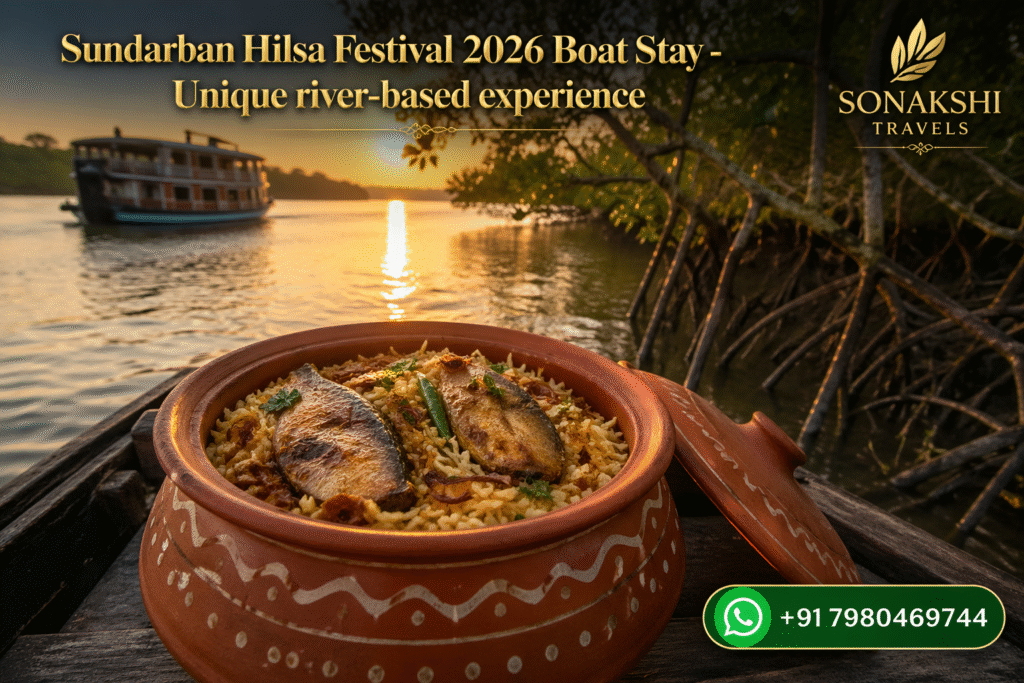
A stay on a boat during the hilsa season creates a form of travel experience that feels very different from an ordinary hotel stay. In the case of the Sundarban hilsa festival 2026, the boat is not only a place to sleep. It becomes the main setting of the journey itself. The river remains under the feet, the changing light shapes the mood of the day, and the soundscape keeps shifting from engine rhythm to flowing water, from distant bird calls to the soft movement of wind across the open channel. A river-based stay is therefore not just accommodation. It is the environment, the frame, and the emotional center of the experience.
What makes this form of stay unique is the way it keeps a traveler inside the river landscape at all times. On land, people usually move out of nature and return to a fixed room at the end of the day. On a festival boat stay, that separation is reduced. The river continues to speak even when one is resting. The body feels the mild motion of water, the eyes remain close to an unbroken horizon, and the mind begins to respond to a slower rhythm. This makes the boat stay one of the most memorable elements of the seasonal Sundarban hilsa festival experience.
The boat as a living space on water
A river boat during the hilsa festival functions like a temporary floating home, yet it never becomes static. That is why the experience feels so special. The structure may include sleeping rooms, a deck, a dining area, and spaces for sitting quietly, but every one of these spaces remains connected to movement. Even when a person is having tea, reading, talking, or simply leaning on the railing, the river remains part of the moment. The stay does not take place beside the landscape. It takes place inside it.
This changes the psychology of rest. A land-based room often closes the outside world and creates stillness through walls. A river-based stay creates rest in another way. Here, calmness comes from repetition: the repeated sound of water touching the hull, the repeated passing of mangrove edges, the repeated widening and narrowing of channels, and the repeated play of light on the river surface. This repetition does not feel dull. It creates mental release. Many travelers feel that they become quieter without trying. The boat itself teaches a slower pace.
That is also why the atmosphere suits people who look for experiential depth rather than quick sightseeing. A thoughtfully arranged boat stay adds a new layer to a broader Sundarban tour because it turns the river from a route into a lived environment. Instead of using the water only as a passage, the stay allows the traveler to experience the water as a setting of sleep, observation, conversation, appetite, and silence.
The sensory richness of staying on a festival boat
The strongest quality of a boat stay is sensory depth. The river is never visually empty. Its surface changes with every hour. Morning light may spread softly in pale silver tones, the afternoon may sharpen reflections into bright lines, and evening may settle into copper and deep blue textures. This constant visual change keeps the experience fresh even when the boat is anchored or moving slowly.
Sound is equally important. A traveler on a festival boat listens differently than a traveler in a city hotel. The ear begins to notice the difference between flowing current and gentle wave return, between human voices on deck and distant sounds from the riverbank. Silence here is not complete absence of sound. It is a layered quiet made of natural distance. That quality has a powerful effect on the mind. It often reduces mental clutter and makes ordinary activities feel more meaningful.
Smell also plays a role in the memory of the stay. The river air, the nearness of mangrove vegetation, the freshness of food preparation, and the clean openness of the deck create a sensory identity that belongs only to this kind of travel. During the Sundarban ilish utsav 2026, that sensory identity becomes even stronger because the boat is closely tied to the seasonal culinary and river atmosphere of the event.
Taste, of course, becomes part of the emotional story as well. A meal on land can be pleasant, but a meal on water feels more immersive because the surroundings directly shape the mood of eating. When food is served while the river continues around the boat, the dining experience becomes part of the landscape. The mind does not separate the plate from the place. This is one reason a boat stay during the festival often remains vivid in memory for a very long time.
Why river movement changes the emotional experience
One of the least discussed yet most important parts of a boat stay is physical motion. The motion is usually mild, but it affects mood in a subtle way. On stable ground, the body usually forgets where it is. On water, the body remains gently aware. That awareness brings attention back to the present moment. It makes a traveler feel that the stay is active without being tiring.
This small movement also changes the meaning of time. Hours on a boat do not feel like hours in a building. The passing of time is marked by changes in river color, shadows, air temperature, human activity on deck, and the boat’s relation to the bank. The traveler feels the day rather than merely checking the clock. This helps explain why many people describe such a stay as deeply refreshing.
For travelers who are already interested in immersive regional experiences, a boat-based stay can become an especially meaningful part of a carefully chosen Sundarban travel package. It adds value not through luxury language alone, but through lived intimacy with the river environment. The real reward is not simply comfort. It is the rare chance to rest within a moving ecological space.
The relationship between the boat and the mangrove landscape
A festival boat stay becomes memorable because the boat never stands apart from the mangrove world. It moves through channels where the edge between land and water appears delicate, shifting, and alive. This creates a sense of closeness to the river ecosystem without forcing the traveler into noise or rush. The view is not theatrical. It is gradual. That gradualness is important because it allows attention to deepen.
The mangrove landscape is full of pattern. Root formations, muddy tidal edges, textured banks, and repeated lines of vegetation create a visual language that slowly becomes recognizable. The longer a person stays on a boat, the more that person notices these patterns. What first seems silent and similar begins to show variety. This is one of the educational strengths of a river stay: observation improves naturally.
From a research-based travel perspective, this matters because meaningful ecological appreciation often comes from duration, not only from information. A short glance may create curiosity, but a sustained stay creates perception. The boat allows that duration. The traveler sees how the mood of the same landscape changes from morning to noon, from movement to anchoring, from brightness to shadow. Such repeated contact creates a deeper sense of place than a quick passing visit.
This is why experienced planners at a serious Sundarban travel agency often understand that river accommodation is not a minor detail. It can shape the whole quality of the journey. The boat becomes the medium through which the landscape is felt, not merely viewed.
The social atmosphere of a boat stay
Another remarkable feature of this experience is the kind of human interaction it creates. A boat encourages togetherness without crowd pressure. People share deck space, dining moments, river views, and pauses between activities. Conversation often becomes calmer and more reflective because the surroundings themselves are slow. The environment discourages unnecessary hurry.
At the same time, the design of the stay usually leaves space for privacy. A person can stand quietly near the railing, sit apart for a while, or remain inside a room and still feel connected to the river. This balance between shared experience and personal quiet is one of the strongest advantages of a boat stay. It suits couples, families, small groups, and reflective solo travelers in different ways.
For this reason, a river-based seasonal experience can also appeal to those who are otherwise drawn to a more intimate travel style such as a Sundarban private boat tour. Even in a festival setting, the emotional value of privacy, controlled space, and uninterrupted river contact remains very important. The boat allows travel to feel personal even when it is part of a larger seasonal theme.
Night on the river and the meaning of boat stay after dark
The character of the experience changes significantly after sunset. A boat stay at night is not merely the daytime journey continued in darkness. It becomes something quieter and more inward. The visual field narrows, sound becomes more prominent, and the sense of distance grows stronger. This can make the stay feel deeply atmospheric.
Light on a boat after dark has its own beauty. Interior light from cabins, deck lighting, and dim reflection on the water create a contained world floating inside a larger darkness. Many travelers find that this is the moment when the experience becomes emotionally complete. During the day, the eyes travel far. At night, the mind turns inward. The river is still present, but it is felt more through sound, air, and mood than through detail.
Sleeping on a boat also changes the meaning of rest. The body remains within a gently moving environment, and that often creates a strange but soothing sense of suspension from daily life. The psychological distance from urban routine becomes stronger at night because the usual markers of fixed location disappear. The traveler feels less attached to the world of roads, buildings, and schedules.
That is why the boat stay during the Sundarban ilish utsav is often remembered not only for food or scenery, but for the rare feeling of sleeping within the river’s own atmosphere.
Why this experience feels unique within seasonal travel
Many seasonal festivals are experienced as land-based events. People arrive, attend, eat, observe, and return to ordinary accommodation. A hilsa festival boat stay changes that structure completely. It removes the hard line between event and stay. The traveler does not step out of the theme at the end of the day. The river remains present, and the seasonal identity continues into rest, meals, conversation, and sleep.
This continuity creates immersion. It also gives the stay stronger narrative value. Instead of remembering isolated scenes, the traveler remembers an unbroken flow: water, boat, food, light, rhythm, and quiet. In tourism research, this kind of continuity often produces stronger memory because the mind stores the journey as a complete environment rather than as disconnected activities.
That is why the experience can stand out even for people who have already enjoyed a standard Sundarban tour package. The boat stay does not simply add another service element. It changes the structure of perception itself. The visitor no longer relates to the river from outside. The visitor lives on it, even if only for a short period.
The value of careful curation and atmosphere
The success of such a stay depends on thoughtful arrangement. Clean deck space, well-managed dining, comfortable rooms, balanced movement between activity and rest, and an overall sense of rhythm all contribute to the quality of the experience. When these elements are handled properly, the boat feels cohesive rather than improvised.
This is where the role of an experienced Sundarban tour operator becomes important. The traveler may first notice the river and the festival mood, but the lasting comfort of the experience often depends on careful planning behind the scenes. Good curation allows the natural atmosphere to remain central. Poor curation breaks immersion. A strong operator understands that a boat stay must feel calm, not crowded; fluid, not chaotic; close to nature, yet still comfortable enough for meaningful rest.
Some travelers who prefer more refined settings also connect this style of stay with the broader idea of a Sundarban luxury tour, not because the river must become artificially glamorous, but because comfort and atmosphere can be combined without damaging authenticity. When done well, the boat remains true to the river setting while still offering dignified hospitality.
How the boat stay deepens memory of the festival
In the end, the most important value of the boat stay is not technical. It is emotional and experiential. A traveler remembers where one sat in the early light, how the water looked beside the deck, how the night felt around the cabin, how conversation sounded in the open air, and how the river seemed to continue even during rest. These are the details that create long memory.
The boat stay also makes the festival feel rooted in place. Hilsa is not experienced as an abstract cultural subject. It is connected to river life, tidal geography, and the sensory world of water-based travel. This makes the seasonal event feel more complete and more truthful. The stay therefore adds cultural depth through physical setting.
For travelers seeking a journey that feels immersive rather than superficial, the river-based stay remains one of the most distinctive parts of the Sundarban hilsa festival. It transforms accommodation into experience, movement into atmosphere, and the river into a lived space. That is what makes it unique. It is not simply a boat with rooms. It is a temporary world carried by water, shaped by silence, and remembered through rhythm.
Seen in this way, the boat stay is more than a supporting element of the season. It is one of the clearest reasons why the festival feels different from ordinary travel. It allows the traveler to sleep inside the mood of the river, wake within its light, and carry away a memory shaped not by one moment alone, but by a continuous experience of water, stillness, and gentle motion.